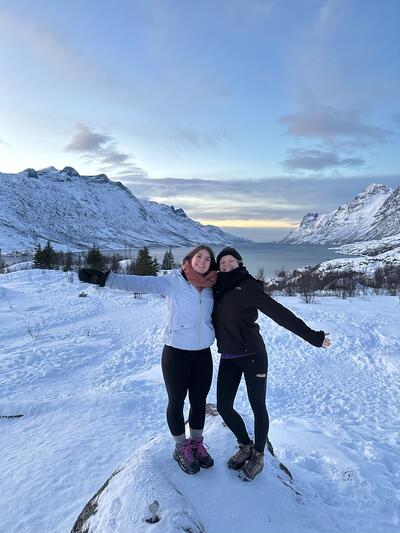
The Michael Sars Centre at the University of Bergen, is an international community of scientists using advanced technologies to study the unique molecular and cellular biology of marine organisms in a changing environment for broad societal impact.
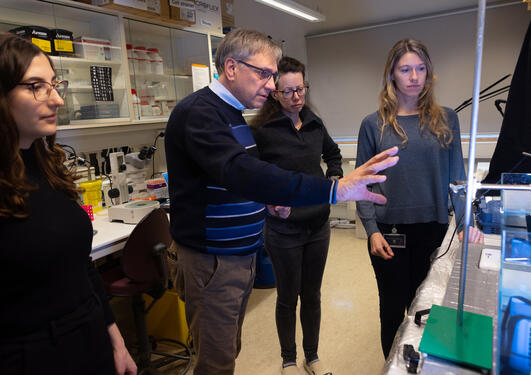
As one of the first EMBL partners, the Michael Sars Centre is rooted in the Bergen academic community and serves as a national strategical asset for Norwegian marine life sciences. We aim to establish, strengthen, and leverage local, national, and international networks through specific activities, including collaborative research, joint training, and scientific exchange.

Calendar
Dr. Kristina Noreikiene, Vilnius University, Lithuania
Sars Seminar Room. Thormøhlensgt. 55, 5006 Bergen
03.05.2024
10:00–11:00
Michael Sars Seminar Room. Thormøhlensgt. 55, 5006 Bergen
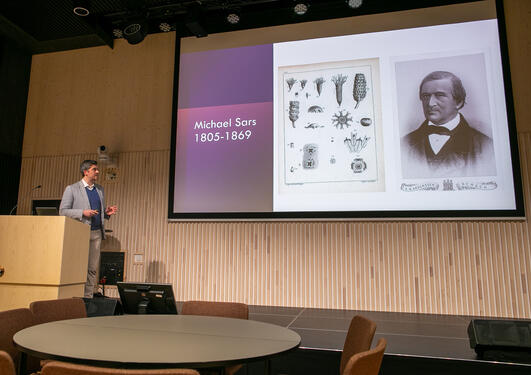
Prof. Frank Conlon, University of North Carolina, USA. (Seminar)
11:00–12:00
Stort Auditorium Høyteknologisenteret, Thormøhlensgate 55
Doctoral Dissertation Defense: Yuhong Wang (Disputation)
10:15–13:00
Sars Seminar Room. Thormøhlensgt. 55, 5006 Bergen
Dr. Alberto Stolfi, Georgia Institute of Technology (Seminar)
10:00–11:00
Media City Bergen. Lars Hilles gate 30, 5008 Bergen, Norway.
Nordic Developmental Biology Societies & Michael Sars Symposium Joint Meeting (Conference)
17:00–12:30